
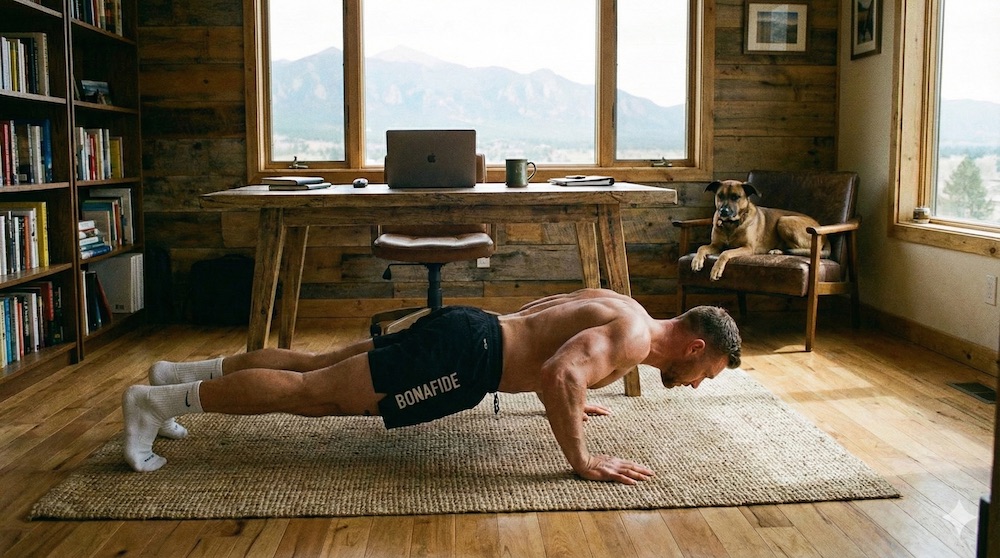
For years, we’ve been conditioned to believe that fitness only "counts" if it involves a gym bag, a commute, and at least sixty minutes of continuous perspiration. But for the remote professional in 2026, the traditional hour-long workout is being exposed for what it often is: an inefficient, stressful addition to an already crowded schedule.
The most practical - and arguably most stylish - fitness trend today isn't a new sport; it’s Movement Micro-Dosing (or "Exercise Snacking"). It’s the end of the sedentary marathon, and it’s changing the way we look at our metabolic health.
The Problem with "The Sedentary Athlete"
Science has recently highlighted a frustrating phenomenon known as the "Active Couch Potato." This describes the person who sits for eight to ten hours straight at a desk and then tries to "undo" the damage with one intense hour at the gym.
The reality? One hour of exercise cannot fully counteract the physiological shutdown that occurs during eight hours of stillness. When you sit for prolonged periods:
- Lipoprotein Lipase (an enzyme that breaks down fat) plummets.
- Insulin sensitivity decreases.
- Blood flow to the brain becomes sluggish, leading to the "afternoon brain fog."
Exercise Snacking solves this by breaking the sedentary loop before the metabolic damage sets in.
What is an "Exercise Snack"?
An exercise snack is a short, isolated burst of vigorous activity - typically lasting between 1 and 5 minutes - performed multiple times throughout the day. The goal isn't to get drenched in sweat or change your clothes; it’s to "re-prime" your physiological pump.
A study published in Nature Medicine found that just three to four one-minute bouts of vigorous activity daily can lead to a 40% reduction in all-cause mortality. For the WFH worker, this is the ultimate "minimum effective dose."
The WFH "Snack Menu": How to Micro-Dose
The beauty of working from home is that no one is watching you do lunges while the coffee brews. Here is how the "En Vogue" remote worker structures their day:
- The "Meeting Transition" Sprints: Instead of checking your phone between calls, do 60 seconds of air squats or "desk push-ups."
- The "Kitchen Sink" Plank: While waiting for your lunch to heat up, hold a plank. It’s a 90-second investment that resets your posture and - re engagement.
- The "Stair Climb" Burst: If you have stairs, running up and down them for two minutes is metabolically equivalent to a much longer jog.
- The "Vagal" Stretch: Every 60 minutes, stand up and reach for the ceiling, followed by a forward fold. This decompresses the spine and resets the nervous system.
The Psychological Win: Ending the "All or Nothing" Mentality
Beyond the physical benefits, exercise snacking kills the "I don't have time" excuse. When the barrier to entry is only two minutes, the brain can't negotiate its way out of it.
By the end of a standard work-from-home day, an "exercise snacker" may have accumulated 20 to 30 minutes of high-quality movement without ever feeling the "dread" of a looming gym session. You finish your workday feeling energized and mobile, rather than stiff and depleted.
The Bottom Line
In 2026, we’ve realized that our bodies aren't designed for a "binary" existence of total stillness followed by total exertion. We are designed to move frequently. Exercise snacking isn't just a fitness hack; it’s a lifestyle architecture that treats movement as a constant, nourishing thread throughout your day.