
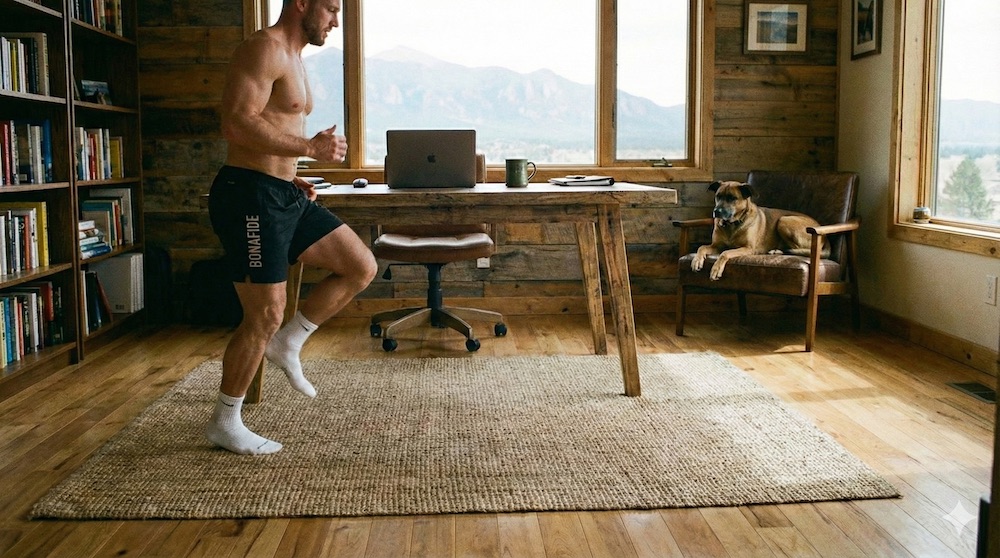
For decades, the corporate world - and even our home offices - has been governed by a persistent, toxic myth: that productivity is a linear result of time spent "on." We treated our brains like machines that just needed more fuel (caffeine) and more uptime to yield better results.
But as the lines between our living rooms and our boardrooms have blurred, a new, more sophisticated philosophy has emerged among the high-achievers of 2026. The most "en vogue" opinion in wellness isn't a new supplement or a boutique workout; it’s the radical realization that rest is not the absence of work - it is a functional requirement for it.
The Science of the "Rest-Performance" Loop
To understand why the world’s most successful remote CEOs and creatives are scheduling naps and "non-linear time," we have to look at the biology of the brain. Our cognitive resources are finite. When we push through the "afternoon slump" with grit alone, we aren't actually producing high-quality work; we are merely performing "productivity theater."
True high performance follows a pulse. Think of a professional sprinter: they don't stay in a crouched starting position all day. They explode, then they recover. In the WFH context, this means:
- Cognitive Decompression: Allowing the "Default Mode Network" of the brain to take over, which is where creative problem-solving actually happens.
- Systemic Regulation: Lowering cortisol levels so that when you do return to your desk, your focus is sharp rather than frantic.
Shifting the Metric: From "Hours" to "Energy"
The reason "Rest as a Tool" is trending is that it moves the goalposts. We are stoping the obsession with the 8-hour workday and starting to obsess over Energy Management. If you spend four hours in a state of high-focus "Flow" and four hours in deep, intentional recovery, you will almost always out-produce the person who spends twelve hours in a state of semi-distracted "grey work." Rest is the period where your "mental muscles" actually grow and consolidate information. Without it, you are training for burnout, not success.
"The elite remote worker doesn't brag about how little they slept; they brag about how effectively they recovered."
How to Weaponize Rest in Your Home Office
Integrating this into a WFH routine requires a mindset shift. It’s about moving from passive rest (scrolling social media) to active recovery.
- The 90-Minute Pulse: Work in 90-minute deep-work blocks, followed by 15 minutes of "non-sleep deep rest" (NSDR) or a total disconnect from screens.
- Strategic Boredom: Set aside 20 minutes a day to do nothing. No podcasts, no music, no chores. This "boredom" allows your brain to categorize the data you've been processing all morning.
- The "Shutdown Ritual": Create a hard boundary. When the laptop closes, use a sensory trigger - like a specific scent or a change of clothes - to signal to your nervous system that the performance phase is over.
The Bottom Line
In 2026, the "hustle" is being replaced by the "rhythm." By treating rest as a professional discipline rather than a guilty pleasure, you aren't just feeling better - you’re getting better. You aren't "taking a break"; you are sharpening the axe.