
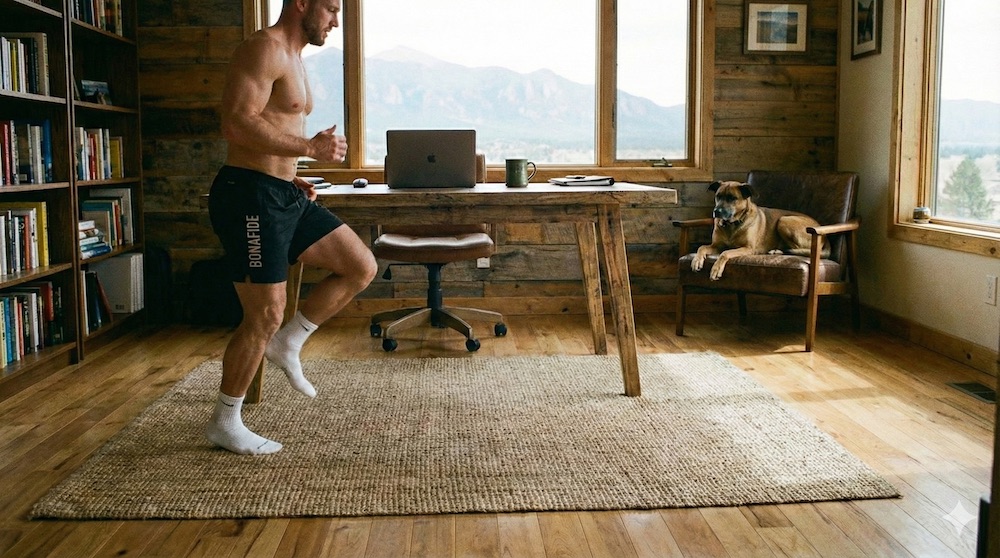
We need to talk about that expensive motorized desk you just bought.
The marketing promised you everything. It told you that "sitting is the new smoking" and that simply pressing a button to elevate your laptop would magically fix your back pain, improve your focus, and undo years of slouching.
It's a compelling sales pitch. It's also mostly nonsense.
While a standing desk is a useful tool, it is not a cure. If you stand for 4 hours a day with the same locked knees, collapsed arches, and forward-rolled shoulders that you had while sitting, you haven't solved the problem. You've just changed the angle of it.
Here is why ergonomics alone won't save you - and what actually will.
Why Standing Desks Don't Fix Pain
The villain of the modern workplace isn't "sitting." The villain is stillness.
The human body is designed for dynamic motion, not static endurance. When you switch from sitting frozen to standing frozen, you are trading one set of problems for another.
- Sitting Static: Tight hip flexors, weak glutes, rounded spine.
- Standing Static: Venous pooling in the legs, lower back compression, and heel pain.
If you stand still for two hours, your body will eventually hang on its passive structures (ligaments and joints) rather than using active muscle support. This "lazy standing" is just sitting upright. You aren't engaging your core; you're just leaning on your skeleton.
Posture Is an Output, Not a Cue
We often treat posture like a moral failing. We think, "If I just remember to pull my shoulders back, I'll be fine."
But posture isn't something you "hold" with willpower. Posture is a reflection of your strength and mobility.
If your chest muscles are tight from typing and your upper back muscles are weak from disuse, your shoulders will roll forward. No amount of "sitting up straight" will fix that for more than 30 seconds. To fix your posture permanently, you don't need a better chair or a standing desk - you need to change the tension balance in your muscles.
Strength training changes posture automatically. When you deadlift, row, or carry heavy things, your body naturally finds a stronger alignment. You don't have to "try" to stand tall; your muscles simply hold you there.
The "Movement-First" Desk Setup
The goal of your home office shouldn't be "perfect ergonomics." It should be maximum variability.
The best posture is your next posture.
Instead of trying to find the one perfect position, design a workflow that forces you to shift constantly:
- The 30/30 Rule: If you have a standing desk, spend 30 minutes sitting, then 30 minutes standing. Repeat.
- Fidget with Purpose: While standing, put one foot up on a small box or stool. Switch feet every 5 minutes. This unlocks your lower back and keeps your pelvis mobile.
- Floor Time: Once a day, take your laptop to the floor. Squat, kneel, or sit cross-legged. It sounds unprofessional, but your hips will thank you.
When Ergonomics Actually Matter
This doesn't mean you should throw your Herman Miller chair in the trash. Ergonomics matter, but they are the baseline, not the solution.
Set your screen at eye level so your neck isn't flexed. Keep your keyboard low so your wrists aren't cocked. But once those basics are set, stop obsessing over the gear.
A $2,000 desk setup cannot compensate for a weak back or a sedentary lifestyle. Buying gear is easy. Moving your body is hard. Do the hard thing.
The "Desk Movement" Checklist
Stop buying more furniture. Start building better habits.
We've created a "5 Daily Posture Resets" guide. These are five specific movements you can do right next to your desk (in under 60 seconds) to reverse the damage of the workday.
- No equipment needed.
- No sweating required.
- Just pure relief for your neck and back.